
Most visits focus on the primary complaint, but important symptoms can be overlooked if they’re not asked directly.
The ROS Agent guides patients through a structured review of body systems before the visit, helping uncover additional symptoms that may impact diagnosis and care.
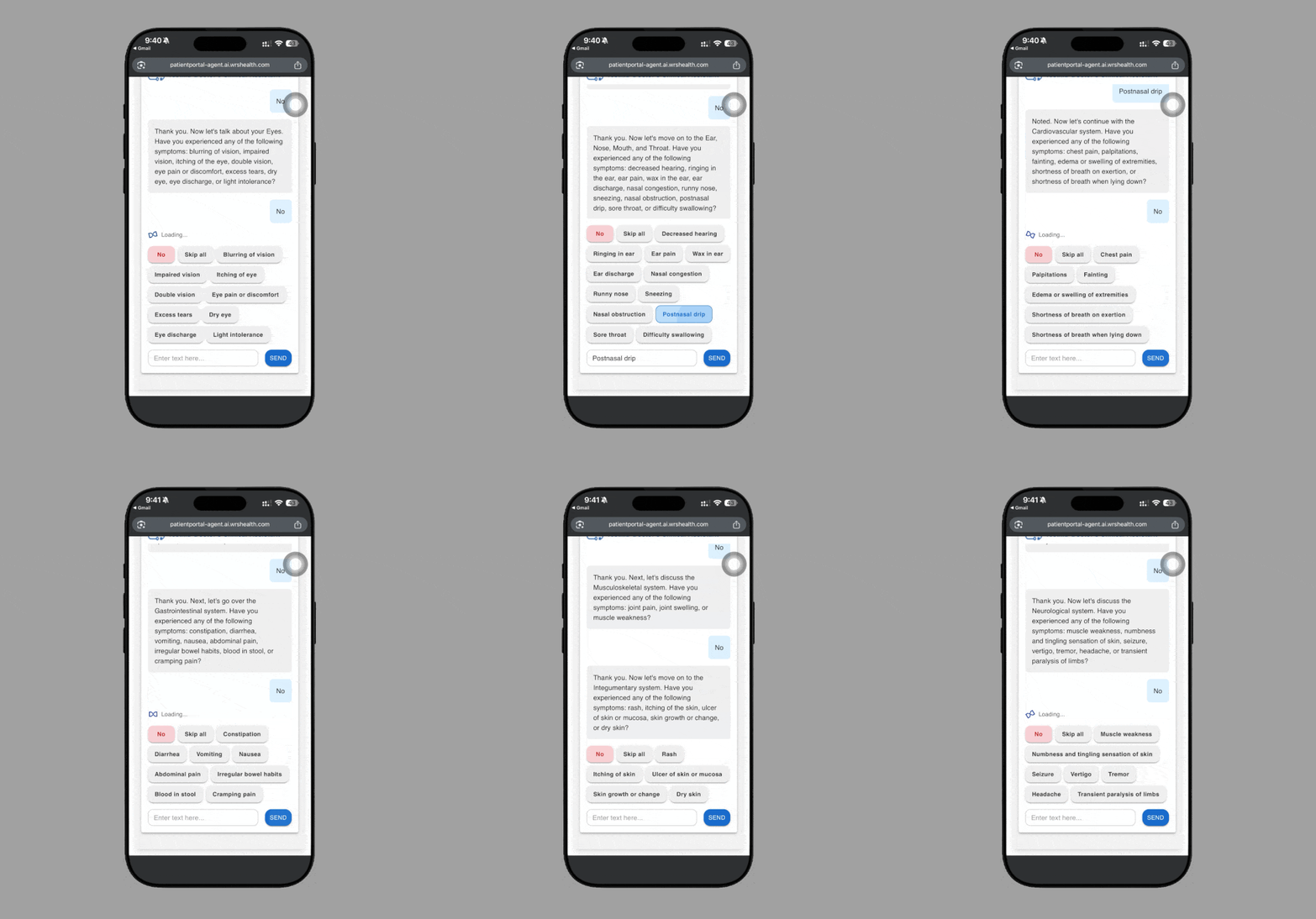
Patients respond to a simple checklist covering multiple body systems.
The agent walks through symptoms across systems like respiratory, cardiovascular, neurological, and more.
ROS is completed ahead of time, reducing the need for manual review during the visit.
The system identifies symptoms beyond the primary complaint, helping provide a more complete clinical picture.
Explore how our ROS Agent functions with the demo below:
Understanding a patient’s condition requires more than focusing on a single complaint—it requires visibility across systems.
The ROS Agent gathers that broader context before the encounter by guiding patients through a structured checklist of symptoms. It confirms what is present, what is not, and what may require further attention.
Because this process is standardized, clinicians receive consistent, complete symptom information for every visit.
When used alongside other agents, ROS helps connect patient-reported symptoms with history, medications, and clinical workflows—ensuring nothing is missed.
The agent captures symptoms across multiple body systems, not just the primary concern.
Each patient completes the same structured review, improving consistency across visits.
ROS data complements HPI, medication, and other workflows, helping create a more complete view of the patient.
ROS plays a critical role in identifying symptoms that patients may not mention unless prompted.

Consider a patient named Caroline.
Caroline comes in for a persistent cough. The visit begins by discussing her primary symptom.
Unless the provider asks a full series of system-based questions, additional symptoms—like fatigue, mild headaches, or shortness of breath—may go unreported.
These details might only surface later, or not at all, potentially delaying a complete understanding of her condition.

Before her appointment, Caroline completes a guided Review of Systems.
The agent walks her through a checklist of symptoms across multiple body systems, prompting her to confirm or deny each one.
By the time the visit begins, the provider already has a broader view of her symptoms.
Instead of discovering information gradually, the clinician can assess the full picture from the start.
Find out how the ROS agent can make an
impact to your practice.
A Review of Systems (ROS) is a structured checklist of symptoms across different body systems. It helps confirm whether a patient is experiencing additional symptoms beyond their main complaint.
During visits, time is limited and questions may vary. The ROS Agent standardizes the process by guiding every patient through the same structured review before the encounter begins.
Yes. The agent uses simple prompts and guided responses, making it easy for patients to confirm symptoms without needing medical terminology.
No. The ROS Agent supports clinicians by providing a complete symptom overview. Providers still interpret and act on the information during the visit.
By capturing additional symptoms early, clinicians can make more informed decisions and reduce the risk of missing relevant clinical details.
ROS can be configured based on practice preferences. It can be required or optional depending on the visit type.
For follow-up visits, the agent can guide patients through the same structured ROS process, ensuring updated symptom information is captured consistently.
ROS data complements HPI, medication reconciliation, and other workflows by adding system-wide symptom information to the patient record.
Yes. All responses are securely stored and shared with the provider through HIPAA-compliant workflows.
Clinicians begin the encounter with a more complete understanding of the patient’s symptoms, reducing the need to manually conduct a full system review.